The Social Security Fairness Act of 2023, formally known as H.R. 82, aimed at ending two provisions in the Social Security system that affect public sector employees who have earned pensions from jobs not covered by Social Security. These provisions are the Windfall Elimination Provision and the Government Pension Offset, both of which reduce or eliminate Social Security benefits for workers who have worked in both public-sector and private-sector jobs.
The Problem: WEP and GPO
The Windfall Elimination Provision and the Government Pension Offset were originally designed to prevent public sector workers from receiving larger Social Security benefits than they would have been entitled to had they worked in jobs covered by Social Security for their entire careers. However, critics argue that these provisions disproportionately harm workers who have spent a significant portion of their careers in public service, such as teachers, police officers, firefighters, and other state and local government employees.
Windfall Elimination Provision (WEP):
The WEP reduces the Social Security benefits of individuals who have worked in both the private sector (where they paid into Social Security) and the public sector (where they often did not contribute to Social Security). Typically, Social Security benefits are based on an individual’s 35 highest-earning years. The WEP alters the formula used to calculate benefits for individuals with fewer than 30 years of substantial earnings in Social Security-covered employment, leading to a lower Social Security benefit than they would otherwise be entitled to. For many, this results in a significant reduction in the monthly payment they would have received under the standard Social Security formula.
Government Pension Offset (GPO):
The GPO affects spouses and widows/widowers of Social Security beneficiaries. Under this provision, individuals who receive a government pension from work that was not covered by Social Security (such as state or local government employees) see a reduction in their spousal or survivor benefits from Social Security. The offset is calculated by reducing the spousal or survivor benefit by an amount equal to two-thirds of the government pension. This can leave many public employees with little to no spousal or survivor benefits despite their spouse having paid into Social Security.
What H.R. 82 Seeks to Accomplish
By eliminating both the WEP and GPO, the bill aims to ensure that public sector workers who have earned Social Security benefits through their work in the private sector are not penalized by reductions in those benefits. It also seeks to provide fairer treatment for the spouses and survivors of government employees who may otherwise see their Social Security benefits reduced or eliminated entirely.
The bill has garnered bipartisan support, as lawmakers from both sides of the aisle recognize the fairness of eliminating these provisions, which many see as an unjust penalty against those who have dedicated their careers to public service. H.R. 82, if passed, would provide much-needed relief to millions of retirees, many of who are struggling with the financial impacts of these provisions.
Conclusion:
The introduction of H.R. 82, the Social Security Fairness Act of 2023, marks a crucial point in the ongoing debate over Social Security benefits for public sector workers. By eliminating the Windfall Elimination Provision and the Government Pension Offset, the bill would restore fairness and equity for millions of public employees who have spent their careers in service to their communities. As this bill progresses, it will likely remain a significant issue in discussions surrounding Social Security reform and the treatment of public sector employees.
President Joe Biden signed H.R. 82, the Social Security Fairness Act, into law on Sunday, January 5, 2025, at 3:00 p.m. Central Time Zone.
The Social Security Fairness Act of 2023: More Retirement Income for Teachers, Police, Firefighters & Gov. Workers
January 1, 2025 · Blog, Guest Article of the Month, Uncategorized
⏱ 3 min read
The Social Security Fairness Act of 2023, formally known as H.R. 82, aimed at ending two provisions in the Social Security system that affect public sector employees who have earned pensions from jobs not covered by Social Security. These provisions are the Windfall Elimination Provision and the Government Pension Offset, both of which reduce or eliminate Social Security benefits for workers who have worked in both public-sector and private-sector jobs.
The Problem: WEP and GPO
The Windfall Elimination Provision and the Government Pension Offset were originally designed to prevent public sector workers from receiving larger Social Security benefits than they would have been entitled to had they worked in jobs covered by Social Security for their entire careers. However, critics argue that these provisions disproportionately harm workers who have spent a significant portion of their careers in public service, such as teachers, police officers, firefighters, and other state and local government employees.
Windfall Elimination Provision (WEP):
The WEP reduces the Social Security benefits of individuals who have worked in both the private sector (where they paid into Social Security) and the public sector (where they often did not contribute to Social Security). Typically, Social Security benefits are based on an individual’s 35 highest-earning years. The WEP alters the formula used to calculate benefits for individuals with fewer than 30 years of substantial earnings in Social Security-covered employment, leading to a lower Social Security benefit than they would otherwise be entitled to. For many, this results in a significant reduction in the monthly payment they would have received under the standard Social Security formula.
Government Pension Offset (GPO):
The GPO affects spouses and widows/widowers of Social Security beneficiaries. Under this provision, individuals who receive a government pension from work that was not covered by Social Security (such as state or local government employees) see a reduction in their spousal or survivor benefits from Social Security. The offset is calculated by reducing the spousal or survivor benefit by an amount equal to two-thirds of the government pension. This can leave many public employees with little to no spousal or survivor benefits despite their spouse having paid into Social Security.
What H.R. 82 Seeks to Accomplish
By eliminating both the WEP and GPO, the bill aims to ensure that public sector workers who have earned Social Security benefits through their work in the private sector are not penalized by reductions in those benefits. It also seeks to provide fairer treatment for the spouses and survivors of government employees who may otherwise see their Social Security benefits reduced or eliminated entirely.
The bill has garnered bipartisan support, as lawmakers from both sides of the aisle recognize the fairness of eliminating these provisions, which many see as an unjust penalty against those who have dedicated their careers to public service. H.R. 82, if passed, would provide much-needed relief to millions of retirees, many of who are struggling with the financial impacts of these provisions.
Conclusion:
The introduction of H.R. 82, the Social Security Fairness Act of 2023, marks a crucial point in the ongoing debate over Social Security benefits for public sector workers. By eliminating the Windfall Elimination Provision and the Government Pension Offset, the bill would restore fairness and equity for millions of public employees who have spent their careers in service to their communities. As this bill progresses, it will likely remain a significant issue in discussions surrounding Social Security reform and the treatment of public sector employees.
President Joe Biden signed H.R. 82, the Social Security Fairness Act, into law on Sunday, January 5, 2025, at 3:00 p.m. Central Time Zone.
Disclaimer
These articles provide general information on tax, accounting, and financial topics for small businesses and individuals. They are educational in nature and are not specific legal, accounting, financial, tax, or other professional advice, and should not be relied upon as such. This content was prepared by Service2Client and may have been reviewed or edited by the website owner for accuracy and compliance. Look for a trust mark below for verification details. No representation is made that any approach described will achieve a particular result, and no regulatory or professional body has reviewed or endorsed this content. Because each situation is different, readers should consult a qualified professional about their specific circumstances before acting. Images accompanying these articles are protected by copyright and may not be copied or reused.
A Dec. 3 proposal from FASB’s Accounting Standards Update (ASU) might provide some flexibility for private businesses and select nonprofits. “Financial Instruments – Credit Losses (Topic 326)” looks at measuring credit losses for contract assets and accounts receivable for these entities.
When it comes to determining projected credit losses for current accounts receivables and current contract assets, businesses face immense resource needs and reporting requirements, including for assets acquired prior to the publication dates of financial statements.
With public comments being received through Jan. 17, 2025, industry professionals have reported that when it comes to gauging projected credit losses for current contract assets and current accounts receivable, there’s a massive undertaking and validation necessary for assets collected prior to financial statement issuance dates. Industry professionals argue that being able to factor in collections post-balance sheet date in calculating expected credit losses would reduce the complexity for preparers, whereas, for third parties, including investors and others who utilize financial statements, it would provide them with valuable data.
FASB proposed an amendment to ASC 326 207 to allow private companies and certain not-for-profit entities to employ a more flexible and efficient way to better gauge their projected credit losses for current contract assets and accounts receivable that originate from transaction accounts under ASC 606.
Working with the Private Company Council (PCC) to look at stakeholders’ concerns that estimating projected credit losses can be exorbitant and complicated for financial proceedings, FASB is soliciting comments on whether or not to expand the scope of entities included for ASU standards, along with different asset classes.
Current Criteria
According to ASC 326-20, when expected credit losses are estimated by entities, an entity must evaluate their ability to garner cash flows via the lens of contemporary economic circumstances, rational and documented projections, and past losses. Past losses may need to be fine-tuned to approximate project credit losses if past circumstances change from present conditions or from well-ground estimates and documented projections. Another consideration when formulating credit loss projections is that entities aren’t required to factor in collections obtained post-balance sheet date.
Proposed Additions
When it comes to the proposed additions, FASB speaks to a practical expedient and an accounting policy election. The practical expedient concerns an entity’s well-grounded, data-dependent projections. If an entity chooses the practical expedient, it would be able to factor in collection activity beyond the balance sheet date when projecting expected credit losses.
Practical Expedient
To formulate projections that are rational and based on verified accounting details, this so-called practical expedient can be chosen by the entity that assumes its present balance sheet conditions will last for the entire projection time frame. Choosing a practical expedient also implies that an entity’s accounting policy will factor in collection activity past its balance sheet date when gauging expected credit losses. Specifically, under 326-20-30-10C for the practical expedient, during the projection time frame, an entity will maintain the exact circumstances of the balance sheet throughout the rational and data-based projection period.
If a business, for example, has determined a particular client is facing monetary challenges, it would account for its client’s financial issues through projections of estimated expected credit losses for said client, even though it has not impacted the business’ historical loss experience or if the business is up to date as of the balance sheet date.
Accounting Policy Election
Per 326-20-30-10E, when a practical expedient from 326-20-30-10C through 30-10D is chosen by entities for their accounting policy election when projecting credit losses, it signals that the entity factors in collection activity after the balance sheet date, but prior to the date of financial statement issuance. If an entity uses one or both of the practical expedient and/or accounting policy elections, disclosure is mandatory.
Conclusion
Lastly, such advice would be administered on a forward-looking basis, and both of these entities (PCC and FASB) will make the ultimate findings and guidelines of the implementation dates once industry professionals’ comments are considered. However, entities will likely be able to utilize these guidelines sooner.
For eligible companies, these standards could provide greater flexibility and the ability to divert resources to more productive allocations.
How Reporting Might be Less Complex in 2025
January 1, 2025 · Accounting News, Blog, Uncategorized
⏱ 4 min read
A Dec. 3 proposal from FASB’s Accounting Standards Update (ASU) might provide some flexibility for private businesses and select nonprofits. “Financial Instruments – Credit Losses (Topic 326)” looks at measuring credit losses for contract assets and accounts receivable for these entities.
When it comes to determining projected credit losses for current accounts receivables and current contract assets, businesses face immense resource needs and reporting requirements, including for assets acquired prior to the publication dates of financial statements.
With public comments being received through Jan. 17, 2025, industry professionals have reported that when it comes to gauging projected credit losses for current contract assets and current accounts receivable, there’s a massive undertaking and validation necessary for assets collected prior to financial statement issuance dates. Industry professionals argue that being able to factor in collections post-balance sheet date in calculating expected credit losses would reduce the complexity for preparers, whereas, for third parties, including investors and others who utilize financial statements, it would provide them with valuable data.
FASB proposed an amendment to ASC 326 207 to allow private companies and certain not-for-profit entities to employ a more flexible and efficient way to better gauge their projected credit losses for current contract assets and accounts receivable that originate from transaction accounts under ASC 606.
Working with the Private Company Council (PCC) to look at stakeholders’ concerns that estimating projected credit losses can be exorbitant and complicated for financial proceedings, FASB is soliciting comments on whether or not to expand the scope of entities included for ASU standards, along with different asset classes.
Current Criteria
According to ASC 326-20, when expected credit losses are estimated by entities, an entity must evaluate their ability to garner cash flows via the lens of contemporary economic circumstances, rational and documented projections, and past losses. Past losses may need to be fine-tuned to approximate project credit losses if past circumstances change from present conditions or from well-ground estimates and documented projections. Another consideration when formulating credit loss projections is that entities aren’t required to factor in collections obtained post-balance sheet date.
Proposed Additions
When it comes to the proposed additions, FASB speaks to a practical expedient and an accounting policy election. The practical expedient concerns an entity’s well-grounded, data-dependent projections. If an entity chooses the practical expedient, it would be able to factor in collection activity beyond the balance sheet date when projecting expected credit losses.
Practical Expedient
To formulate projections that are rational and based on verified accounting details, this so-called practical expedient can be chosen by the entity that assumes its present balance sheet conditions will last for the entire projection time frame. Choosing a practical expedient also implies that an entity’s accounting policy will factor in collection activity past its balance sheet date when gauging expected credit losses. Specifically, under 326-20-30-10C for the practical expedient, during the projection time frame, an entity will maintain the exact circumstances of the balance sheet throughout the rational and data-based projection period.
If a business, for example, has determined a particular client is facing monetary challenges, it would account for its client’s financial issues through projections of estimated expected credit losses for said client, even though it has not impacted the business’ historical loss experience or if the business is up to date as of the balance sheet date.
Accounting Policy Election
Per 326-20-30-10E, when a practical expedient from 326-20-30-10C through 30-10D is chosen by entities for their accounting policy election when projecting credit losses, it signals that the entity factors in collection activity after the balance sheet date, but prior to the date of financial statement issuance. If an entity uses one or both of the practical expedient and/or accounting policy elections, disclosure is mandatory.
Conclusion
Lastly, such advice would be administered on a forward-looking basis, and both of these entities (PCC and FASB) will make the ultimate findings and guidelines of the implementation dates once industry professionals’ comments are considered. However, entities will likely be able to utilize these guidelines sooner.
For eligible companies, these standards could provide greater flexibility and the ability to divert resources to more productive allocations.
Disclaimer
These articles provide general information on tax, accounting, and financial topics for small businesses and individuals. They are educational in nature and are not specific legal, accounting, financial, tax, or other professional advice, and should not be relied upon as such. This content was prepared by Service2Client and may have been reviewed or edited by the website owner for accuracy and compliance. Look for a trust mark below for verification details. No representation is made that any approach described will achieve a particular result, and no regulatory or professional body has reviewed or endorsed this content. Because each situation is different, readers should consult a qualified professional about their specific circumstances before acting. Images accompanying these articles are protected by copyright and may not be copied or reused.
Here we are in yet another new year. The obligations and celebrations are over. Chances are, you’ve spent a fair amount over the holidays and might need a plan to help kickstart 2025 with some actionable financial goals. Here are a few ideas.
Create a Budget
This one never gets old. Why? It’s one of the keys to successful budgeting. You can set up a budget for the year that includes essentials, entertainment, and nice-to-haves, aka your Wish Farm. Then place it in your planner or app – there are many good ones out there. In fact, there’s a TikTok trend called loud budgeting, where people openly discuss their financial goals on social media – why they do or don’t want to buy something. If this is your thing and it helps you stay on track, go for it! If not, a good old-fashioned planner works just as well.
Bucket Your Money
This is the next step after the aforementioned. Split your money into categories: food, rent/ mortgage, utilities, medical, entertainment, vacation, etc. Apps can help you parse out these groups. You might also set up separate banking accounts for some of the necessities so you’ll know to leave them alone and not dip into them, tempting as it may be.
Set Up Auto-Drafts
Let’s say you’re saving for your child’s college fund or a down payment on a car. When you create an auto-draft for a certain amount, you’ll never miss that deposit. If you need to tweak the amount during the year, do it. Here’s the bottom line: 1) You’ll learn to live on less, and 2) you’ll be on the way to making your dreams come true.
Look for Savings Deals
Don’t just settle for the interest rate your current bank is offering. There are many options out there to grow your money. But first, do you want to lock into a fixed rate? This can be useful for long-term goals, such as buying a property. Or do you want an easy-to-access account with the ability to withdraw cash for emergencies or short-term needs like birthday or wedding gifts? Shop around.
Cancel Seldom-Used Subscriptions
Scour your bank statement. Do you need all those online magazine subscriptions? How about newsletters you pay for – the ones you rarely read? Purge your subscriptions, then see how much you’ll save. If you’re so inclined, you could put these dollars toward a gym membership. January is when all the specials appear: zero joining fees, if not a seriously cut rate.
Start a Savings Challenge
Try putting away a small amount every month. Get in the habit of emptying your pockets or coin purse. Safeguard your coins in a mason jar, and then transfer them monthly into your savings account. The next month, increase how much you contribute. Pennies, nickels, dimes, and quarters add up! After a year, you might be surprised how much you’ve saved.
Decide on Goals
These can be small or large. It’s up to you. Spend some time thinking about what’s important. Do you want to remodel your house? Contribute to a beloved charity or cause? One resource you might want to consider setting up is an emergency spending pot. This is essential and sometimes overlooked. Regardless of what you decide, figure out your parameters: how much to set aside, how often, and by when. Having financial targets gives you something to look forward to. Best of all, when you achieve your goal, it’s an awesome feeling.
More often than not, New Year’s resolutions center on getting physically fit. But if you stay the course with your finances, you’ll most definitely be, wait for it … fiscally fit!
Sources
10 things you can do right now to start 2025 with fresh finances
January 1, 2025 · Blog, Tip of the Month, Uncategorized
⏱ 4 min read
Here we are in yet another new year. The obligations and celebrations are over. Chances are, you’ve spent a fair amount over the holidays and might need a plan to help kickstart 2025 with some actionable financial goals. Here are a few ideas.
Create a Budget
This one never gets old. Why? It’s one of the keys to successful budgeting. You can set up a budget for the year that includes essentials, entertainment, and nice-to-haves, aka your Wish Farm. Then place it in your planner or app – there are many good ones out there. In fact, there’s a TikTok trend called loud budgeting, where people openly discuss their financial goals on social media – why they do or don’t want to buy something. If this is your thing and it helps you stay on track, go for it! If not, a good old-fashioned planner works just as well.
Bucket Your Money
This is the next step after the aforementioned. Split your money into categories: food, rent/ mortgage, utilities, medical, entertainment, vacation, etc. Apps can help you parse out these groups. You might also set up separate banking accounts for some of the necessities so you’ll know to leave them alone and not dip into them, tempting as it may be.
Set Up Auto-Drafts
Let’s say you’re saving for your child’s college fund or a down payment on a car. When you create an auto-draft for a certain amount, you’ll never miss that deposit. If you need to tweak the amount during the year, do it. Here’s the bottom line: 1) You’ll learn to live on less, and 2) you’ll be on the way to making your dreams come true.
Look for Savings Deals
Don’t just settle for the interest rate your current bank is offering. There are many options out there to grow your money. But first, do you want to lock into a fixed rate? This can be useful for long-term goals, such as buying a property. Or do you want an easy-to-access account with the ability to withdraw cash for emergencies or short-term needs like birthday or wedding gifts? Shop around.
Cancel Seldom-Used Subscriptions
Scour your bank statement. Do you need all those online magazine subscriptions? How about newsletters you pay for – the ones you rarely read? Purge your subscriptions, then see how much you’ll save. If you’re so inclined, you could put these dollars toward a gym membership. January is when all the specials appear: zero joining fees, if not a seriously cut rate.
Start a Savings Challenge
Try putting away a small amount every month. Get in the habit of emptying your pockets or coin purse. Safeguard your coins in a mason jar, and then transfer them monthly into your savings account. The next month, increase how much you contribute. Pennies, nickels, dimes, and quarters add up! After a year, you might be surprised how much you’ve saved.
Decide on Goals
These can be small or large. It’s up to you. Spend some time thinking about what’s important. Do you want to remodel your house? Contribute to a beloved charity or cause? One resource you might want to consider setting up is an emergency spending pot. This is essential and sometimes overlooked. Regardless of what you decide, figure out your parameters: how much to set aside, how often, and by when. Having financial targets gives you something to look forward to. Best of all, when you achieve your goal, it’s an awesome feeling.
More often than not, New Year’s resolutions center on getting physically fit. But if you stay the course with your finances, you’ll most definitely be, wait for it … fiscally fit!
Sources
10 things you can do right now to start 2025 with fresh finances
These articles provide general information on tax, accounting, and financial topics for small businesses and individuals. They are educational in nature and are not specific legal, accounting, financial, tax, or other professional advice, and should not be relied upon as such. This content was prepared by Service2Client and may have been reviewed or edited by the website owner for accuracy and compliance. Look for a trust mark below for verification details. No representation is made that any approach described will achieve a particular result, and no regulatory or professional body has reviewed or endorsed this content. Because each situation is different, readers should consult a qualified professional about their specific circumstances before acting. Images accompanying these articles are protected by copyright and may not be copied or reused.
The word “innocent” in innocent spouse relief can be misleading. It doesn’t imply you’re perfect or blameless – it’s more about whether you knew or should have known about the tax issue. The IRS defines “innocence” in a specific way, and it hinges on the concept of reasonable ignorance. In short, the issue isn’t one of morality; it’s about whether you could have reasonably been unaware of a tax problem.
Innocent spouse relief allows you to avoid being held responsible for tax debts, penalties, and interest stemming from a joint tax filing. In the case that a spouse (or ex-spouse) made an error that led to a tax issue, regardless of intention, you may not have to shoulder the burden. Say your income wasn’t reported, excessive deductions were claimed, or tax fraud was committed. If you meet the IRS criteria, you can request relief by submitting Form 8857.
Qualifications for Innocent Spouse Relief
To qualify, you must meet several conditions.
Joint Tax Return: The tax liability must arise from a joint return. When you file together, both spouses are equally responsible for any tax issues that arise.
Tax Underreporting: The tax issue must stem from underreported income or an incorrect claim for deductions or credits. This could involve unreported income (like from offshore accounts) or fraudulent deductions made by your spouse.
Lack of Knowledge: You must show that, at the time of filing, you were unaware of the problem and had no reason to suspect it.
Unfair Responsibility: Lastly, it must be deemed unjust to hold you liable. The IRS looks at factors such as whether you benefited from the underreported taxes (e.g., through extravagant spending) or if you’ve divorced.
What Doesn’t Qualify for Innocent Spouse Relief?
Not all cases involving a spouse’s financial mismanagement qualify for relief. The IRS may reject your claim in the following situations:
Awareness of the Mistake: If you knew about the issue or should have known, you won’t be eligible for relief. Simply stating that you didn’t read the return won’t suffice. The IRS expects you to recognize obvious errors if you have access to the relevant information.
Divorce Doesn’t Automatically Provide Relief: Divorce alone doesn’t eliminate your liability for tax debt. Joint returns create shared responsibility, and being separated or divorced doesn’t mean the IRS will automatically release you from this obligation. You must prove your innocence through the relief process.
Disagreements Over Personal Spending: If your spouse’s spending decisions are something you disagree with, the IRS will not consider it a tax issue unless it involves unreported income or fraudulent deductions. The IRS focuses on tax matters, not marital conflicts over financial choices.
Pros and Cons of Filing
Advantages include:
Avoid Financial Hardship: Tax liabilities, along with interest and penalties, can be overwhelming. Innocent spouse relief can protect you from these financial burdens.
Clear Your Name: If you’ve been unfairly tied to a tax issue you didn’t cause, the relief process can help remove you from the responsibility.
Peace of Mind: Successfully claiming relief can bring emotional relief, especially if you’ve gone through a challenging marriage.
Potential drawbacks are:
No Guarantee of Approval: The IRS does not grant relief easily. You’ll need to provide strong evidence, and the process can be lengthy and difficult.
Time Limitations: You generally must apply for relief within two years of the IRS starting collection efforts. Missing this deadline could result in losing the opportunity for relief.
Invasive Process: The IRS will closely examine your financial and personal life, including details about your marriage and finances, which could feel intrusive if you value your privacy.
Possible Strain on Relationships: If you’re still married, filing for relief could cause tension, as it might be seen as blaming your spouse for the tax issue.
Conclusion
To request innocent spouse relief, you’ll need to file Form 8857. Be prepared to provide details about the tax years involved, explain why you didn’t know about the issue, and any supporting documents (like bank statements, emails, or divorce decrees.
After submitting the form, the IRS will notify your spouse or ex-spouse, who will have a chance to respond by a specific date.
What is Innocent Spouse Relief?
January 1, 2025 · Blog, Tax and Financial News, Uncategorized
⏱ 4 min read
The word “innocent” in innocent spouse relief can be misleading. It doesn’t imply you’re perfect or blameless – it’s more about whether you knew or should have known about the tax issue. The IRS defines “innocence” in a specific way, and it hinges on the concept of reasonable ignorance. In short, the issue isn’t one of morality; it’s about whether you could have reasonably been unaware of a tax problem.
Innocent spouse relief allows you to avoid being held responsible for tax debts, penalties, and interest stemming from a joint tax filing. In the case that a spouse (or ex-spouse) made an error that led to a tax issue, regardless of intention, you may not have to shoulder the burden. Say your income wasn’t reported, excessive deductions were claimed, or tax fraud was committed. If you meet the IRS criteria, you can request relief by submitting Form 8857.
Qualifications for Innocent Spouse Relief
To qualify, you must meet several conditions.
Joint Tax Return: The tax liability must arise from a joint return. When you file together, both spouses are equally responsible for any tax issues that arise.
Tax Underreporting: The tax issue must stem from underreported income or an incorrect claim for deductions or credits. This could involve unreported income (like from offshore accounts) or fraudulent deductions made by your spouse.
Lack of Knowledge: You must show that, at the time of filing, you were unaware of the problem and had no reason to suspect it.
Unfair Responsibility: Lastly, it must be deemed unjust to hold you liable. The IRS looks at factors such as whether you benefited from the underreported taxes (e.g., through extravagant spending) or if you’ve divorced.
What Doesn’t Qualify for Innocent Spouse Relief?
Not all cases involving a spouse’s financial mismanagement qualify for relief. The IRS may reject your claim in the following situations:
Awareness of the Mistake: If you knew about the issue or should have known, you won’t be eligible for relief. Simply stating that you didn’t read the return won’t suffice. The IRS expects you to recognize obvious errors if you have access to the relevant information.
Divorce Doesn’t Automatically Provide Relief: Divorce alone doesn’t eliminate your liability for tax debt. Joint returns create shared responsibility, and being separated or divorced doesn’t mean the IRS will automatically release you from this obligation. You must prove your innocence through the relief process.
Disagreements Over Personal Spending: If your spouse’s spending decisions are something you disagree with, the IRS will not consider it a tax issue unless it involves unreported income or fraudulent deductions. The IRS focuses on tax matters, not marital conflicts over financial choices.
Pros and Cons of Filing
Advantages include:
Avoid Financial Hardship: Tax liabilities, along with interest and penalties, can be overwhelming. Innocent spouse relief can protect you from these financial burdens.
Clear Your Name: If you’ve been unfairly tied to a tax issue you didn’t cause, the relief process can help remove you from the responsibility.
Peace of Mind: Successfully claiming relief can bring emotional relief, especially if you’ve gone through a challenging marriage.
Potential drawbacks are:
No Guarantee of Approval: The IRS does not grant relief easily. You’ll need to provide strong evidence, and the process can be lengthy and difficult.
Time Limitations: You generally must apply for relief within two years of the IRS starting collection efforts. Missing this deadline could result in losing the opportunity for relief.
Invasive Process: The IRS will closely examine your financial and personal life, including details about your marriage and finances, which could feel intrusive if you value your privacy.
Possible Strain on Relationships: If you’re still married, filing for relief could cause tension, as it might be seen as blaming your spouse for the tax issue.
Conclusion
To request innocent spouse relief, you’ll need to file Form 8857. Be prepared to provide details about the tax years involved, explain why you didn’t know about the issue, and any supporting documents (like bank statements, emails, or divorce decrees.
After submitting the form, the IRS will notify your spouse or ex-spouse, who will have a chance to respond by a specific date.
Disclaimer
These articles provide general information on tax, accounting, and financial topics for small businesses and individuals. They are educational in nature and are not specific legal, accounting, financial, tax, or other professional advice, and should not be relied upon as such. This content was prepared by Service2Client and may have been reviewed or edited by the website owner for accuracy and compliance. Look for a trust mark below for verification details. No representation is made that any approach described will achieve a particular result, and no regulatory or professional body has reviewed or endorsed this content. Because each situation is different, readers should consult a qualified professional about their specific circumstances before acting. Images accompanying these articles are protected by copyright and may not be copied or reused.
The holiday season is when most people go on shopping sprees and travel. This season also witnesses a surge in online activities in today’s digital world. Unfortunately, cybercriminals take advantage of this period to launch attacks. Therefore, cybersecurity should be the top priority for a business gearing up for peak sales or a shopper looking for the best deal.
Understanding Holiday Cyber Threats
Businesses and consumers face unique challenges during the holiday season. For businesses, the increase in traffic and online transactions can overwhelm systems. This may make them vulnerable to attacks. Cybercriminals may use tactics such as ransomware, phishing scams and fraudulent transactions during the busy season. Consumers, on the other hand, get lured by malicious ads, fake websites and phishing emails that may appear as irresistible holiday deals.
Recognizing these risks is important to staying safe for both businesses and consumers. Understanding them also means taking proactive measures to reduce exposure to cyber threats.
Why Cybersecurity Matters
The lack of effective cybersecurity can lead to financial loss, reputational damage and disruption to a businesses’ operations. On the other hand, consumers face identity theft, unauthorized purchases and compromised financial accounts.
According to the Retail and Hospitality Information Sharing and Analysis Center (RH-ISAC), threats such as ransomware, phishing, and account takeover (ATO) attacks intensify as consumer activity surges. In their 2024 Holiday Season Cyber Threat Trends Report, RH-ISAC emphasizes proactive defense measures, especially during high-traffic periods like the holiday season.
Cybersecurity Best Practices for Businesses
Security measures for businesses include:
Set up a holiday strategy – over the long holidays, businesses tend to have a change in work schedules and fewer staff members. Having a holiday cybersecurity strategy can safeguard against potential cyber threats. This can include an emergency response plan and designating responsible individuals for cybersecurity.
Endpoint security – this involves protecting devices like computers and smartphones used in the business. It is important to update all software, install antivirus programs and enable firewalls to shield the business network from intrusions.
Employee training – human error is one of the leading causes of data breaches. Therefore, it is important to educate staff to recognize phishing attempts. They should also know the importance of strong passwords and reporting suspicious activity.
Monitoring systems for unusual activity – This requires a business to invest in tools that help detect suspicious behavior in its networks. This should include fraud detection systems that will help identify unusual transaction patterns. It also helps detect potential compromises from third-party vendors.
Backup and recovery plan – business continuity in case of an attack is crucial. Therefore, a business should ensure that data is regularly backed up and stored securely. It also helps to test the recovery process regularly.
Cybersecurity Best Practices for Shoppers
Consumers are not immune to holiday cyber-attacks. A consumer must keep the following in mind:
Shop from secure websites – shoppers should be cautious by checking website security. They should check that a website includes “https://” and a padlock icon in the URL. Also, confirm the correct name of the website. It is also important to avoid clicking on links from unsolicited emails or social media ads. This is a common phishing tactic.
Use secure payment methods – a credit card provides better fraud protection than a debit card. Consider digital wallets that have an extra layer of encryption. It is also crucial to avoid saving payment details on websites.
Avoid public wi-fi – shopping on the go may see some shoppers use public networks. These networks expose data to hackers.
Be wary of emails and messages with deals that sound too good to be true. Always verify sender authentication and, where necessary, contact the company directly.
Be cautious about unexpected package notifications. Unexpected package notifications can be a phishing tactic to steal personal information or install malware. Always verify the sender and avoid clicking on links in unsolicited messages.
Be cautious of holiday scams like fake charities, gift card scams and fake gift exchanges that prey on the season’s generosity and excitement. Scammers may trick customers into buying gift cards or sharing personal details through fraudulent schemes. Staying skeptical of unsolicited offers and never sharing sensitive information with unverified sources will help ward off cybercriminal attacks.
Activate multi-factor authentication (MFA) – adding MFA creates an extra layer of security for highly sensitive accounts such as email, bank, and work-related logins.
Closing Thoughts
The holiday season is meant to be a time of celebration and connection, not worry and stress. By implementing robust cybersecurity practices, businesses can protect their operations and customers while shoppers enjoy safe, hassle-free transactions.
Cybersecurity Best Practices for the Holiday Season
December 1, 2024 · Blog, Uncategorized, What's New in Technology
⏱ 4 min read
The holiday season is when most people go on shopping sprees and travel. This season also witnesses a surge in online activities in today’s digital world. Unfortunately, cybercriminals take advantage of this period to launch attacks. Therefore, cybersecurity should be the top priority for a business gearing up for peak sales or a shopper looking for the best deal.
Understanding Holiday Cyber Threats
Businesses and consumers face unique challenges during the holiday season. For businesses, the increase in traffic and online transactions can overwhelm systems. This may make them vulnerable to attacks. Cybercriminals may use tactics such as ransomware, phishing scams and fraudulent transactions during the busy season. Consumers, on the other hand, get lured by malicious ads, fake websites and phishing emails that may appear as irresistible holiday deals.
Recognizing these risks is important to staying safe for both businesses and consumers. Understanding them also means taking proactive measures to reduce exposure to cyber threats.
Why Cybersecurity Matters
The lack of effective cybersecurity can lead to financial loss, reputational damage and disruption to a businesses’ operations. On the other hand, consumers face identity theft, unauthorized purchases and compromised financial accounts.
According to the Retail and Hospitality Information Sharing and Analysis Center (RH-ISAC), threats such as ransomware, phishing, and account takeover (ATO) attacks intensify as consumer activity surges. In their 2024 Holiday Season Cyber Threat Trends Report, RH-ISAC emphasizes proactive defense measures, especially during high-traffic periods like the holiday season.
Cybersecurity Best Practices for Businesses
Security measures for businesses include:
Set up a holiday strategy – over the long holidays, businesses tend to have a change in work schedules and fewer staff members. Having a holiday cybersecurity strategy can safeguard against potential cyber threats. This can include an emergency response plan and designating responsible individuals for cybersecurity.
Endpoint security – this involves protecting devices like computers and smartphones used in the business. It is important to update all software, install antivirus programs and enable firewalls to shield the business network from intrusions.
Employee training – human error is one of the leading causes of data breaches. Therefore, it is important to educate staff to recognize phishing attempts. They should also know the importance of strong passwords and reporting suspicious activity.
Monitoring systems for unusual activity – This requires a business to invest in tools that help detect suspicious behavior in its networks. This should include fraud detection systems that will help identify unusual transaction patterns. It also helps detect potential compromises from third-party vendors.
Backup and recovery plan – business continuity in case of an attack is crucial. Therefore, a business should ensure that data is regularly backed up and stored securely. It also helps to test the recovery process regularly.
Cybersecurity Best Practices for Shoppers
Consumers are not immune to holiday cyber-attacks. A consumer must keep the following in mind:
Shop from secure websites – shoppers should be cautious by checking website security. They should check that a website includes “https://” and a padlock icon in the URL. Also, confirm the correct name of the website. It is also important to avoid clicking on links from unsolicited emails or social media ads. This is a common phishing tactic.
Use secure payment methods – a credit card provides better fraud protection than a debit card. Consider digital wallets that have an extra layer of encryption. It is also crucial to avoid saving payment details on websites.
Avoid public wi-fi – shopping on the go may see some shoppers use public networks. These networks expose data to hackers.
Be wary of emails and messages with deals that sound too good to be true. Always verify sender authentication and, where necessary, contact the company directly.
Be cautious about unexpected package notifications. Unexpected package notifications can be a phishing tactic to steal personal information or install malware. Always verify the sender and avoid clicking on links in unsolicited messages.
Be cautious of holiday scams like fake charities, gift card scams and fake gift exchanges that prey on the season’s generosity and excitement. Scammers may trick customers into buying gift cards or sharing personal details through fraudulent schemes. Staying skeptical of unsolicited offers and never sharing sensitive information with unverified sources will help ward off cybercriminal attacks.
Activate multi-factor authentication (MFA) – adding MFA creates an extra layer of security for highly sensitive accounts such as email, bank, and work-related logins.
Closing Thoughts
The holiday season is meant to be a time of celebration and connection, not worry and stress. By implementing robust cybersecurity practices, businesses can protect their operations and customers while shoppers enjoy safe, hassle-free transactions.
Disclaimer
These articles provide general information on tax, accounting, and financial topics for small businesses and individuals. They are educational in nature and are not specific legal, accounting, financial, tax, or other professional advice, and should not be relied upon as such. This content was prepared by Service2Client and may have been reviewed or edited by the website owner for accuracy and compliance. Look for a trust mark below for verification details. No representation is made that any approach described will achieve a particular result, and no regulatory or professional body has reviewed or endorsed this content. Because each situation is different, readers should consult a qualified professional about their specific circumstances before acting. Images accompanying these articles are protected by copyright and may not be copied or reused.

 The Social Security Fairness Act of 2023, formally known as H.R. 82, aimed at ending two provisions in the Social Security system that affect public sector employees who have earned pensions from jobs not covered by Social Security. These provisions are the Windfall Elimination Provision and the Government Pension Offset, both of which reduce or eliminate Social Security benefits for workers who have worked in both public-sector and private-sector jobs.



 A Dec. 3 proposal from FASB’s Accounting Standards Update (ASU) might provide some flexibility for private businesses and select nonprofits. “Financial Instruments – Credit Losses (Topic 326)” looks at measuring credit losses for contract assets and accounts receivable for these entities.
 Here we are in yet another new year. The obligations and celebrations are over. Chances are, you’ve spent a fair amount over the holidays and might need a plan to help kickstart 2025 with some actionable financial goals. Here are a few ideas.
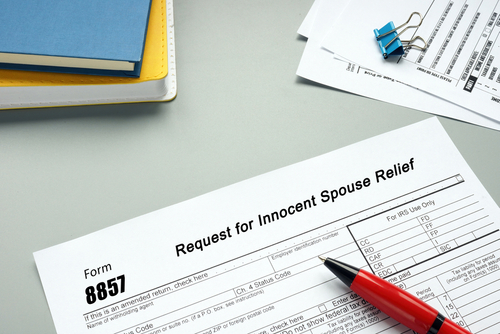 The word “innocent” in innocent spouse relief can be misleading. It doesn’t imply you’re perfect or blameless – it’s more about whether you knew or should have known about the tax issue. The IRS defines “innocence” in a specific way, and it hinges on the concept of reasonable ignorance. In short, the issue isn’t one of morality; it’s about whether you could have reasonably been unaware of a tax problem.
 The holiday season is when most people go on shopping sprees and travel. This season also witnesses a surge in online activities in today’s digital world. Unfortunately, cybercriminals take advantage of this period to launch attacks. Therefore, cybersecurity should be the top priority for a business gearing up for peak sales or a shopper looking for the best deal.